Whatever Happened to the Third Place?
The coffee shops, bars and hangouts we used to live in are disappearing. Here's what we lost with them.
For the first twenty-odd years of your life, friendship mostly happens to you. You get assigned a classroom. You get put on a team. You end up in a dorm with strangers and by October three of them know your coffee order.
Then it stops. Not dramatically — there’s no day it ends. You just look up one year and realize you haven’t made a genuinely new friend in a while, and that the last few came from a job you already left.
If that’s familiar, it’s worth knowing that this isn’t a personal failing. The conditions changed.
Rebecca G. Adams, a sociologist at the University of North Carolina at Greensboro who has spent a career studying friendship, has a well-known answer for why close friendships form so easily when we’re young. It takes three things:
Proximity
You have to keep being in the same physical place as someone. Not once. Repeatedly.
Repeated, unplanned interaction
Not a scheduled catch-up. The kind of running-into-each-other that nobody organized and nobody could cancel.
A setting that lets people drop their guard
Somewhere it’s normal to say something real, rather than the polished version.
School gives you all three at once, for free, for years. Most adult life gives you the first one at work and then quietly withholds the other two.

This isn’t just a feeling people have.
Tracking by the American Time Use Survey found that between 2003 and 2020, the average American’s in-person time with friends fell from around 60 minutes a day to roughly 20. For 15- to 24-year-olds it dropped even faster, from something like 150 minutes a day to about 40.
In 2023, the U.S. Surgeon General published an advisory on loneliness and isolation treating it as a public health issue, noting that roughly half of U.S. adults reported experiencing loneliness. The Survey Center on American Life has documented the same trend across two decades of survey data.
So: it did get harder. Broadly, measurably, and for almost everyone at once. Which is oddly reassuring — whatever you thought was wrong with you probably isn’t.
The fix isn’t becoming a different, more outgoing person. It’s rebuilding those three ingredients deliberately, since they no longer arrive on their own.
One run club you attend eight times will do more for your social life than eight different events you attend once. Novelty feels productive. Repetition is what actually produces friends, because it’s the only thing that manufactures the second, third and fourth encounter.
The easiest conversations happen sideways, over a shared activity, rather than face-to-face across a table with nothing to do but talk. A class, a game, a hike, a volunteer shift — anything that gives your hands a job and takes the pressure off the silence.
Someone has to move from “friendly” to “friends,” and most people are waiting for the other person to do it. Being the one who suggests something is a small social risk with a wildly disproportionate payoff. Keep the ask tiny — a coffee, a walk, an hour.
Not every promising person becomes a friend, and that’s normal rather than evidence of anything. The people with big social lives aren’t better at this; they’ve just had more attempts and mind the misses less.
The evening you almost skipped is, with irritating frequency, the one where something clicks. Motivation tends to arrive after you’re already there.
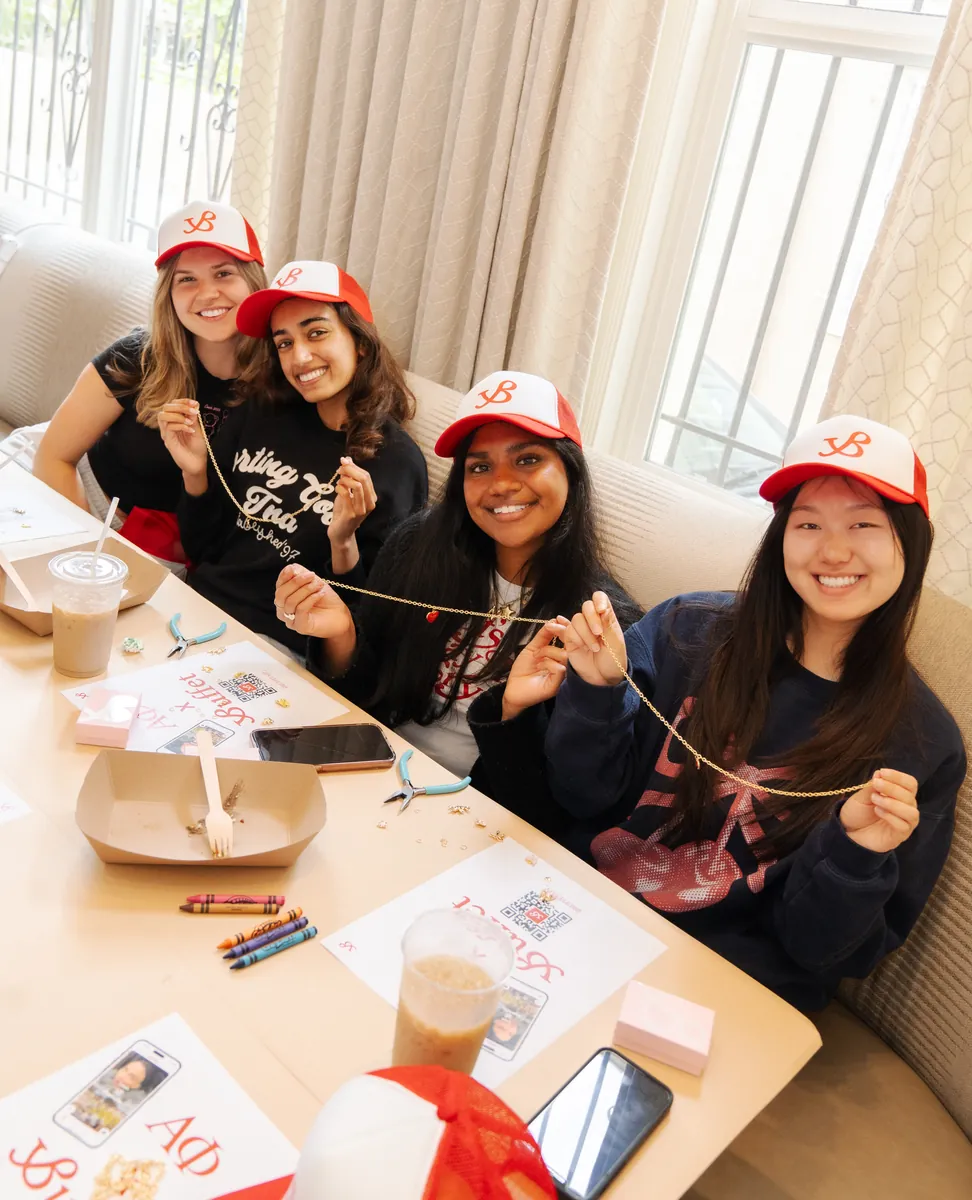
Look back at those three ingredients and you’ll notice the hard one isn’t proximity. It’s the repeated, unplanned, low-stakes contact — the part school handed you and adulthood took away.
That’s the part we built Buffet for. We pick the place, we set the time, and we put you with people who chose the same night out that you did. No group chat that dies before anyone commits. No spending a week deciding where to go. You say yes, and you turn up.
Do that a few times and the ingredients start doing what they’ve always done.
Download Buffet, and let us handle the logistics. The rest is just showing up — which, it turns out, was always most of it.

The coffee shops, bars and hangouts we used to live in are disappearing. Here's what we lost with them.

Navigate the world of social apps with confidence. Learn the unwritten rules and best practices.

First meetings don't have to be awkward. Discover techniques for authentic connections.